What are PayTo® Agreements?
Digital payment contracts that define how funds can be collected from a customer's bank account
PayTo agreements are digital payment agreements between a customer and a business (merchant) that define how payments can be collected from the customer's bank account.
The customer authorises the agreement through their banking app, after which the business can initiate payments according to the agreed terms.
How PayTo Agreements Work
At a high level, a PayTo agreement works as a reusable or one time payment authority between a business and a customer.
Instead of collecting card details or paper direct debit forms, businesses can create a PayTo agreement request which is sent to the customer's bank for approval via their trusted banking digital channel.
Once approved, payments can be initiated according to the agreed terms. Customers also retain control over the agreement, with the ability to pause, modify or cancel at any time right from their banking app or digital channel — in which case businesses are alerted in near real time.
Types of Agreements and Use Cases
PayTo supports a range of payment scenarios through flexible agreement types.
Recurring Payments
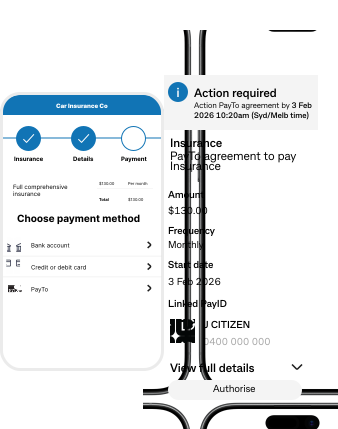
Used for ongoing billing such as subscriptions, memberships, or utilities. Payments are initiated based on a defined schedule.
For example, use PayTo to pay car insurance via monthly instalments.
One-off Payments
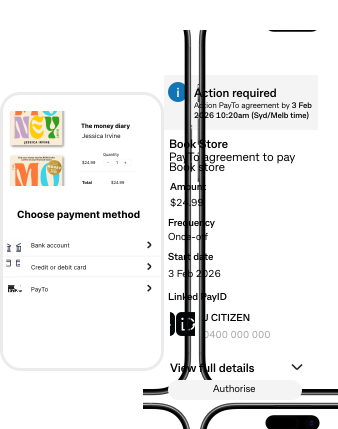
Ideal for invoices or single transactions where payment is authorised once and processed immediately.
For example, use PayTo to purchase a book from an online retailer.
Ad-hoc Agreement
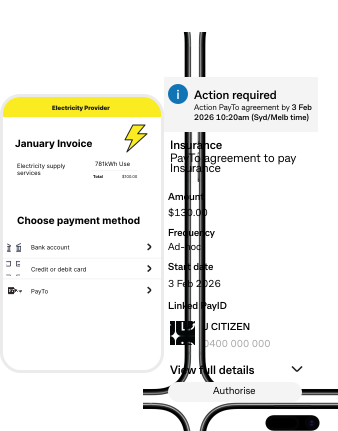
Supports payment plans, loan repayments, or scenarios where the agreements need to support flexible payment timings and amounts.
In addition, ad-hoc agreements support account-on-file, where businesses can store the agreement and initiate future payments on demand, supporting experiences like one-click checkout or repeat purchases.
For example, use PayTo to purchase from an online retailer on a frequent basis.
Choosing the Right Agreement Type
| Agreement Type | Best For | Payment Pattern |
|---|---|---|
| Recurring | Subscriptions or memberships | Fixed schedule |
| One-off | Single purchases or invoices | One-time payment |
| Ad-hoc | Variable or usage-based billing | Flexible timing or amounts or On-demand within agreed terms (account-on-file) |
Typical Agreement Flow
1. Customer selects PayTo at checkout
The customer chooses PayTo as their payment method during checkout, onboarding, or invoice payment and provides their account details or PayID information.
Examples:
- Online checkout
- Subscription sign-up
- Loan repayment setup
- Utility billing
2. Business creates a PayTo agreement
The business submits an agreement request containing details such as:
- Business name
- Payment amount or limits
- Frequency
- Start and end dates
- Customer account details or PayID
- Reference information
The agreement is then sent to the customer's financial institution.
3. Customer authorises the agreement
The customer receives a notification in their mobile banking app or online banking channel and reviews the agreement details.
They can:
- Authorise
- Decline
This approval happens within the security of their trusted banking channel.
4. Payments can commence
Once authorised:
- The agreement becomes active
- The business can initiate payments based on the agreed terms (e.g. one-off or recurring)
- Payment responses and status updates are returned in near real-time
Key Characteristics of PayTo Agreements
Customer-controlled
Customers can manage agreements directly from their banking app, including:
- Pausing agreements
- Resuming agreements
- Cancelling agreements
This improves transparency and customer trust.
Real-time visibility
Businesses will receive near real-time notifications for all status updates including:
- Agreement creation
- Authorisation
- Cancellation
- Suspension
- Payment success or failure
This helps improve reconciliation and operational efficiency, with the ability to take immediate action with customers if needed.
Rich payment data
PayTo agreements support structured and comprehensive data, providing key context to merchants and making integration with ERP, CRM, accounting, and treasury systems easier.
For example, agreement identification, description, terms, and references such as invoice number or purchase details.
Example End-to-End Scenario
Subscription Service
A streaming platform wants to collect monthly subscription payments.
CX Flow:
- Customer selects PayTo during signup
- The platform creates a recurring PayTo agreement
- Customer approves the agreement in their banking app
- Monthly payments are initiated by the business
- Customer can pause or cancel the agreement at any time from their banking app
This creates a digital alternative to traditional direct debit with improved customer visibility and real-time payment processing.
PayTo is a registered trade mark of NPP Australia Ltd ABN 68 601 428 737.